

Company Overview
-
Founded Date 21/11/2022
-
Posted Jobs 0
-
Viewed 5
-
Categories
Company Description
10 Tell-Tale Signs You Need To Look For A New Robot Vaccum
The Rise of Robot Vacuums: A Cleaning Game-Changer
In today’s busy world, benefit and performance are paramount, especially in the realm of home chores. Amongst the ingenious innovations created to ease domestic problems, robot vacuums have actually emerged as a popular option for customers seeking cleanliness without the hassle. This article explores the advancement, features, benefits, and drawbacks of robot vacuums, in addition to responses often asked questions on the subject.
The Evolution of Cleaning Technology
A Brief History
Robot vacuums, also referred to as autonomous vacuums, trace their origins back to the late 20th century. The very first robotic vacuum was introduced by Electrolux in the late 1990s, but it wasn’t till the early 2000s that the principle got traction with the launch of the iRobot Roomba in 2002. Ever since, the marketplace has blown up, and numerous brands and designs have actually emerged to resolve diverse cleaning needs.
Table 1: Milestones in Robotic Vacuum Development
| Year | Turning point | Brand |
|---|---|---|
| 1996 | First prototype presented | Electrolux |
| 2002 | Release of the Roomba | iRobot |
| 2012 | Introduction ofWi-Fi connection | iRobot |
| 2019 | Shipment drones in usage | Amazon |
| 2023 | AI and machine learning combination | Numerous Brands |
How Robot Vacuums Work
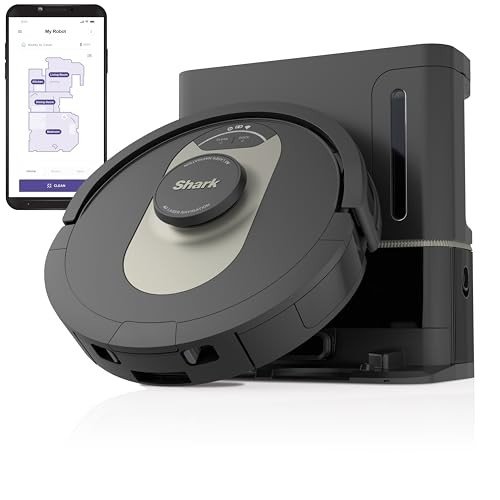
Robot vacuums operate utilizing a combination of sensors, mapping technology, and suction abilities. Most designs are equipped with the following core elements:
-
Sensors: These assist the vacuum navigate the environment, detect barriers, and Best robovac prevent falls from stairs.
-
Mapping Technology: Higher-end models can develop an in-depth map of the home, enabling for systematic cleaning patterns.
-
Suction Power: Most robot vacuums come with differing levels of suction power, enabling efficient cleaning on different surface types– from carpets to wood floorings.
-
Connection: Many robot vacuums can connect to smart home systems, permitting users to manage them via mobile phones or voice commands.
Table 2: Key Features of Robot Vacuums
| Function | Description | Significance |
|---|---|---|
| Floor Mapping | Develops a design of the home | Efficient cleaning routes |
| Scheduling | Permits users to set cleaning times | Convenience and automation |
| Charge and Resume | Returns to the dock when battery is low | Constant cleaning cycles |
| Smart Home Integration | Suitable with Alexa, Google Assistant, etc. | Boosted control and automation |
Benefits of Robot Vacuums
1. Time-Saving
Robot vacuums operate autonomously, allowing users to participate in other activities while cleaning occurs. This is particularly valuable for hectic families or experts.
2. Constant Cleanliness
Routine cleaning is important for keeping a neat home. Robot vacuums can be set to clean everyday or weekly, making sure that dust and dirt do not accumulate.
3. Availability
Many robot vacuums are designed to reach tight areas that traditional vacuums can not. This consists of under furniture, in corners, and along edges.
4. Advanced Technology
With features like mapping, smart scheduling, and voice control, robot vacuums exhibit the advances in home technology. Users can operate them quickly through an app or voice command, which includes to benefit.
5. Sustainability
Many robot vacuums have efficient cleaning systems that use less energy compared to traditional vacuums. Some models even provide functions like washable filters to decrease waste.
Downsides of Robot Vacuums
While robot vacuums use numerous benefits, they also feature drawbacks that customers should consider.
1. Expense
Robot vacuums typically cost more than traditional vacuum, particularly designs with advanced functions. This preliminary financial investment may not be feasible for every single family.
2. Minimal Suction Power
Although lots of robot vacuums have actually seen improvements in suction innovation, they still typically lack the effective suction required for deep cleaning, particularly on thick carpets.
3. Maintenance
Robot vacuums require routine upkeep to work efficiently. This includes cleaning brushes, clearing dustbins, and replacing filters, which can be more effort than anticipated.
4. Navigation Issues
Some lower-end designs might struggle to navigate complicated home layouts or may get stuck on obstacles, requiring manual intervention.
5. Battery Life
While numerous designs offer effective cleaning within a particular timeframe, longer cleaning tasks might require multiple recharges, resulting in disturbances in cleaning cycles.
Regularly Asked Questions (FAQ)
1. Are robot vacuums worth the investment?
Purchasing a robot vacuum can be worth it for those who value time saving and consistent cleaning. Nevertheless, customers ought to assess their cleaning needs and space before purchase.
2. How typically does a robot vacuum require to be cleaned?
Routine upkeep ought to be performed weekly or biweekly, depending on use and household conditions. Emptying the dustbin after each use is necessary to make sure ideal functioning.
3. Can robot vacuums tidy carpets efficiently?
Lots of modern robot vacuums are created particularly to tidy carpets, offering numerous suction settings. Nevertheless, they might not match the performance of standard vacuum for deep cleaning.
4. Do robot vacuums work on animal hair?
Many premium robot vacuums are developed to handle family pet hair. Models with tangle-free brushes and high suction power stand out in homes with family pets.
5. Can robot vacuums browse around furnishings?
The majority of robot vacuums are equipped with sensing units that assist them prevent barriers, consisting of furnishings. However, some models may struggle in situational specifics like low-clearance furniture.
Robot vacuums represent a considerable development in cleaning technology, offering benefit and performance for modern-day households. While they feature several benefits, consisting of time-saving capabilities and advanced functions, it is important for customers to weigh the disadvantages, such as expense and upkeep, before choosing a purchase. As technology continues to progress, it is likely that robot vacuums will only improve, even more strengthening their place in homes around the world.